Book summary:
In ”The Rise and Fall of the Dinosaurs”, palaeontologist Steve Brusatte tells the 200-million-year story of dinosaurs: From their small beginnings to their global dominance and sudden extinction. The book brings dinosaurs to life as dynamic, evolving animals rather than slow, primitive reptiles.
Dinosaurs first appeared after a massive extinction about 252 million years ago. At first, they were small and overshadowed by other reptiles, but environmental changes and new opportunities allowed them to diversify. During the Jurassic and Cretaceous periods, dinosaurs evolved into a stunning variety of forms: From enormous, long-necked herbivores to powerful predators like Tyrannosaurus rex (T-rex for the rest of this post).
One of the book’s most important insights is that birds are living dinosaurs. Fossil discoveries, especially feathered species, show that feathers and flight evolved gradually. This means dinosaurs never fully disappeared. They still exist today in the form of birds.
After ruling Earth for around 150 million years, most dinosaurs were wiped out 66 million years ago when a massive asteroid struck Earth, causing global climate collapse. Small bird-like dinosaurs survived, and their descendants continue to thrive today.
Bottom line: Dinosaurs weren’t just giant extinct creatures. They were adaptable survivors whose legacy still lives above us in the skies.
Why I read the book:
When I was a pre-schooler and primary school student, like many others, I loved dinosaurs and read many books about them. However, after turning twelve I had read nothing about these pre-histori creatures until I came across the book ”The Rise and Fall of the Dinosaurs” by Steve Brusatte.
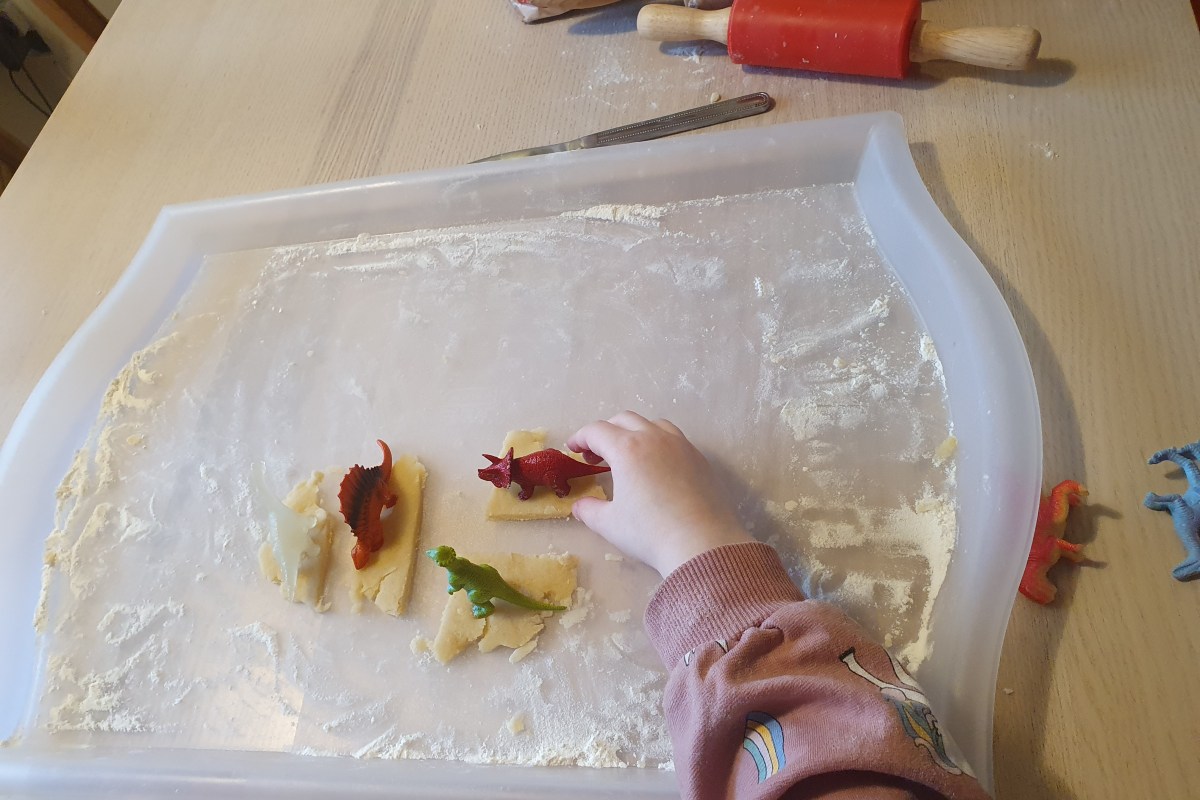
To be honest, the main reason I decided to read it is that I now have the next generation of dinosaur-enthusiastic pre-schooler at home. I felt that I wanted to know more about dinosaurs to engage in meaningful and deeper conversations with my daughter about the science behind them. I wanted to talk to her not only about how dinosaurs were very big and cool animals, but also about deeper scientific concepts. This book has really helped me with this.
For example, my daughter and me had a conversation about how dinosaurs evolved into birds that are still around. This concept is today mentioned in most dinosaur books for pre-schoolers. (It was not when I was a child.) When my daughter asked me if T-rex turned into a bird, I could confidently answer that it was not T-rex himself, but a related species of biped, meat-eating dinosaurs, a cousin so to speak.
This turned into a discussion about what features T-rex and other biped, meat-eating dinosaurs had that we still see in birds today. Brusattes book really helped me with some similarities here, which I would not have known to mention to my daughter otherwise.
We came up with:
- their feet look very similar
- some biped, meat-eating dinosaurs had feathers
- they lay eggs with hard shells
- most biped, meat-eating dinosaurs could run very fast like some birds today (ostrich, emu, nandu, chicken)
- caring for their young
- fast growth
What I though if the book:
Despite originally reading it to keep up with my child’s ever-growing dinosaur knowledge, it turned out that I actually enjoyed this book very much and would recommend it to anyone who has an interest in science and nature. The following paragraphs describe why that is.
What I really liked about the book is how Brusatte blends his personal experiences foraging for fossils with the evolution of dinosaurs. He tells you about trips he took looking for fossils, trips to labs or even just having discussions with other scientists and fits this into the different periods that dinosaurs were around on Earth. Sometimes, this can feel a bit drawn out and slow, but for the most part it succeeds in bringing palaeontology to life. It also gives you a very good idea about what the work of a palaeontologist is like today and what tools they have at their disposal when researching pre-historic life.
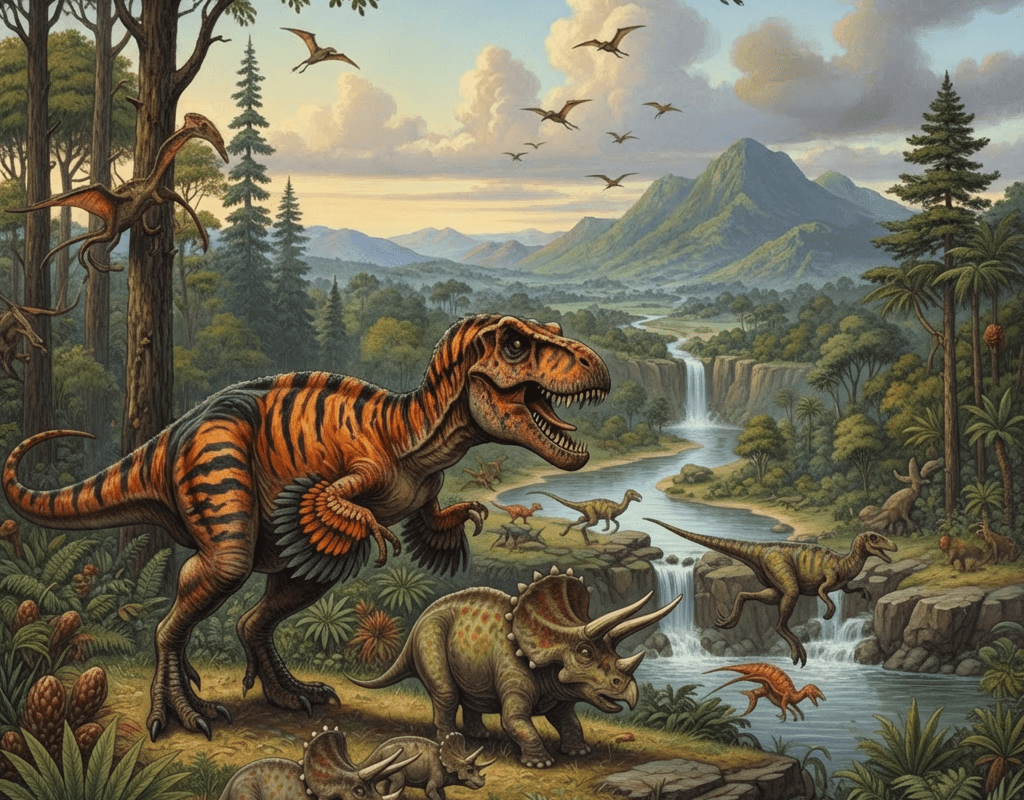
Brusatte also succeeds at bringing scenes from the world of the dinosaurs to live. I will never forget the scene where he describes a T-rex hunting some Edmontosaurus on a riverbank. It really feels like you are there watching it together with the poor Triceratops on the other side of the river. The same goes for the scene describing how a pack of T-rexes would have experienced the asteroid impact that caused their extinction 66 million years ago.
I was first a bit sceptical that a whole chapter was dedicated solely to T-rex. I felt a bit like: ”Have we not heard enough of T-rex? Everyone knows about him.” But I learned a lot of new facts about T-rex (that I can share with my dinosaur-crazy pre-schooler) and am glad now I did not jump this chapter like I first wanted to. For example, I had no idea palaeontologists believe they may have lived in packs. Nor did I know that they are assumed to have been quite smart, about as smart as chimpanzees based on the ratio of their brain size versus body size!
I also loved how Brusatte covers the evolution and changes of ecosystems during the time of the dinosaurs. This is no easy feat considering the number of changes taking place over this time like the supercontinent Pangaea slowly breaking up into the continents we know today. It also reminded me how short the time is that we humans have been around. Our genus ”Homo” has only been around for 2 to 3 million years and our species ”Homo sapiens” only for a meagre 300 000 years. That is nothing compared to how long dinosaurs ruled the Earth from the late Triassic to the late Cretaceous, for more than 150 million years.
 A tang of science