Reading Exercise: The Dangers of Radioactivity

Radioactive radiation

Radioactive radiation is dangerous because it is ionizing. This means that it has enough energy to knock electrons out of their shells and thus turn atoms into ions.

A large amount of ionizing radiation can cause radiation burns (skin burns) and radiation sickness. Small amounts of ionizing radiation can damage DNA. This is called mutation and can later lead to cancer. If mutations occur in gametes (sex cells), they can be passed on to the next generation and can cause birth defects in newborns.

Protection from radiation

We are exposed to background radiation all the time. However, the amount is too small to harm us. But people who work with radioactive materials are exposed to more radiation and need to take precautions.

There are three ways to limit the effects of ionizing radiation: keeping a distance from the source, shielding and a time limit to exposure. For example, radioactive samples are always handled with tongs to keep a distance and stored in containers with thick lead walls for shielding.

Ionizing radiation is also used in hospitals to detect and treat cancer. Patients can be exposed to small amounts of radiation during their treatment. However, this is only done if the benefits are greater than the risks.

Irradiation and contamination

Sometimes there are accidents in nuclear power stations which can lead to radioactive materials escaping to the environment. This can lead to the irradiation and contamination of plants, animals and people. It is important to understand the difference between irradiation and contamination.

Someone is irradiated if they are close to a radioactive material and exposed to its radiation. Once the person moves away the irradiation stops.

Someone is contaminated if they get particles of radioactive material on their skin or inside their body, for example by eating or breathing. This person continues to be exposed to the radiation until all the material has decayed inside their body.

Things to do

  1. What is ionizing radiation?
  2. Give four effects of ionizing radiation on the human body.
  3. Why is background radiation not dangerous for us?
  4. State three ways to protect yourself from radiation.
  5. Why are radioactive samples handled with tongs and kept in lead containers with thick walls?
  6. What is the difference between irradiation and contamination?
  7. In case of a nuclear accident, what is worse? Irradiation or contamination? Why?
  8. Do you know any examples of nuclear accidents that have happened around the world? If yes, which do you know?

How to make your own terrarium

This activity is easy to do at home with children of any age.

You will need

  • Soil
  • Moss
  • Water (ideally from a stream or pond outside, but tap water will do also)
  • Glass jar
  • Stones (just a few)

What to do

  1. Collect what you need during a walk.
  2. Fill the glass jar first with the soil.
  3. Then add the stones.
  4. Next add the moss.
  5. Finally add some water. The moss likes it humid, but be careful not to drown it.
  6. Close the jar with the lid.
  7. Observe your biosphere carefully over the next days and weeks.

Active reading exercise: Isotopes

Isotopes

In 1932 James Chadwick, a British scientist, discovered the neutron. His discovery explains how isotopes are formed. Isotopes have the same number of protons, but different numbers of neutrons.

We can also say that the atomic number is the same, but the mass numbers are different. Isotopes are the same element because their atomic number does not change.

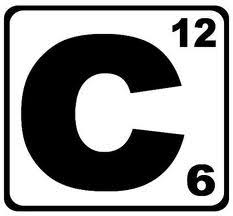
We refer to an isotope by adding its mass number to the element’s name. The isotope in the diagram below is called carbon-12.

carbon

Carbon isotopes

Carbon can occur as three different isotopes. They are called carbon-12, carbon-13 and carbon-14.

Carbon dating is used to identify the age of very old objects, for example the remains of extinct animals such as mammoths. The amount of the carbon isotope carbon-14 in an object is examined to determine its age.

Things to do

  1. Fill in the missing words and numbers to describe the similarities and differences between isotopes of the same element.                                                                                 a) Isotopes are atoms with the same            number but different                   number. b) They have the same number of protons and electrons but different numbers of                      .
  2. Name the scientist who discovered the neutron.
  3. Why are isotopes the same element?
  4. How do we refer to isotopes?
  5. Name the three isotopes of carbon.
  6. Why is the isotope carbon-14 useful?
  7. Using your knowledge about isotopes, fill in the gaps in the table a, b and c.
Isotope name Atomic number Mass number
 Tin-116  50 a
b c 118

Remember that the atomic number is the same for isotopes of the same element.

Active reading exercise: The Atom

A bit of history

In 1805 the English Chemist John Dalton published his atomic theory that said:

  • Everything is made up from tiny particles called atoms
  • Atoms are tiny hard spheres (= balls) that cannot be broken down into smaller parts
  • Atoms in one element are all identical

This helped to explain many properties of materials. However, later experiments showed that atoms contained even smaller particles. In 1897 another British scientist, JJ Thomson, discovered the electron. The nucleus which makes up the middle of an atom was discovered by Ernest Rutherford in 1913.

The Structure of the atom

Today we know that atoms are made from three subatomic particles: proton, neutron and electron.

Protons and neutrons are found in the centre of the atom which is called the nucleus. Both have a mass of 1. Protons have a positive (+) charge and neutrons are neutral (= no charge).

Electrons have a negative (-) charge and have almost no mass at all. They are found on the electron shells on the outside of the atom, circling the nucleus.

What you need to remember

  • Atoms are made from protons, neutrons and electrons called subatomic particles
  • Protons: found in nucleus, positive (+) charge and a mass of 1
  • Neutrons: found in nucleus, neutral (no charge) and a mass of 1
  • Electrons: found on electron shells, negative (-) charge and almost no mass


Things to do

  1. Name the scientist who first introduced atomic theory.
  2. Name the scientists who discovered the electron and the nucleus.
  3. State the names of the three subatomic particles as well as their masses and charges.
  4. State where in the atom protons and neutrons are found.
  5. State where in the atom electrons are found.
  6. Copy and label the image of the atom. Words: electron, proton, neutron, shellLithium atom
  7. Describe in your own words what an atom looks like. Include information about the charges and masses of the subatomic particles.

Women in Science: Mary Anning, Pioneering Paleontologist

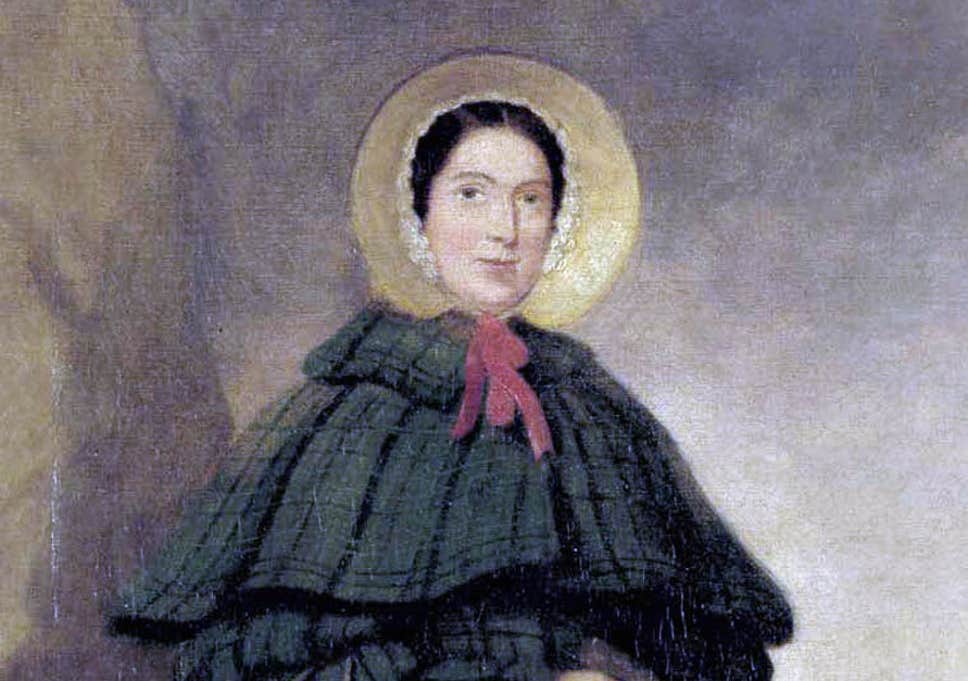
Image credit ‘Mr. Grey’ in Crispin Tickell’s book ‘Mary Anning of Lyme Regis’ (1996)

Mary Anning came from quite disadvantaged beginnings, being born into a poor English family in 1799. Out of 10 children only she and her older brother survived into adulthood. Her father was a cabinet maker by profession and a keen fossil hunter on the side. He took Mary along for his collection trips and taught her how to clean and look after the fossils which he would often sell in his shop. When her father died of tuberculosis in 1810, Mary, still a child at the time, was encouraged by her mother to help the family financially by selling her fossils.

As a child Mary received very little formal education due to the lack of money in her family. She could read, but had to teach herself geology and anatomy.

Together with her brother, Mary discovered the first Ichthyosaur fossil (the remains of a marine reptile) when she was only 12 years old. After she had uncovered the 5.2 m long skeleton, scientists initially thought it was a crocodile. They debated the find for years.

You need to remember that at this time, the idea of extinction had just recently been introduced by Georges Cuvier. In addition, Charles Darwin did not publish his theory about evolution for another 48 years. People’s views on the creation of species was still largely based on the accounts of the Bible.

In 1823, still only aged 14, Mary was the first to discover a complete skeleton of a Plesiosaur (a ”sea dragon”), another marine reptile and even more controversial find. The fossil looked so strange and unlike any living animals, that it was rumoured to be a fake. Five years later followed the discovery of Pterodactylus, the remains of the first winged dinosaur found in Britain. In addition to uncovering many skeletons, Mary pioneered the study of coprolites, which is fossilized poo.

Mary was extremely proficient in uncovering, cleaning and identifying fossils. She continued to unearth countless remains. Many were sold to male scientists who profited from her work. Nevertheless, she was never recognized for it. Mary was not even mentioned in the papers about her groundbreaking Ichthyosaur find.

Mary died of breast cancer in 1847, aged only 47. Although she was never acknowledged formally for her discoveries, she left a great legacy of scientific discoveries. There are scientists who believe that her findings have in part contributed to the theory of evolution introduced by Charles Darwin over ten years after her death.