What you need
- Pasta in different shapes
- Sausages
- Food colouring of your choice
- Warm water
- Bowls
- Spoons
Note: You can use other food items instead of pasta and sausages. Choose foods with a light colour so that you can easily see how well they take up the food colouring.
What to do
- Cook the pasta. Younger children should ask an adult for help with this step.
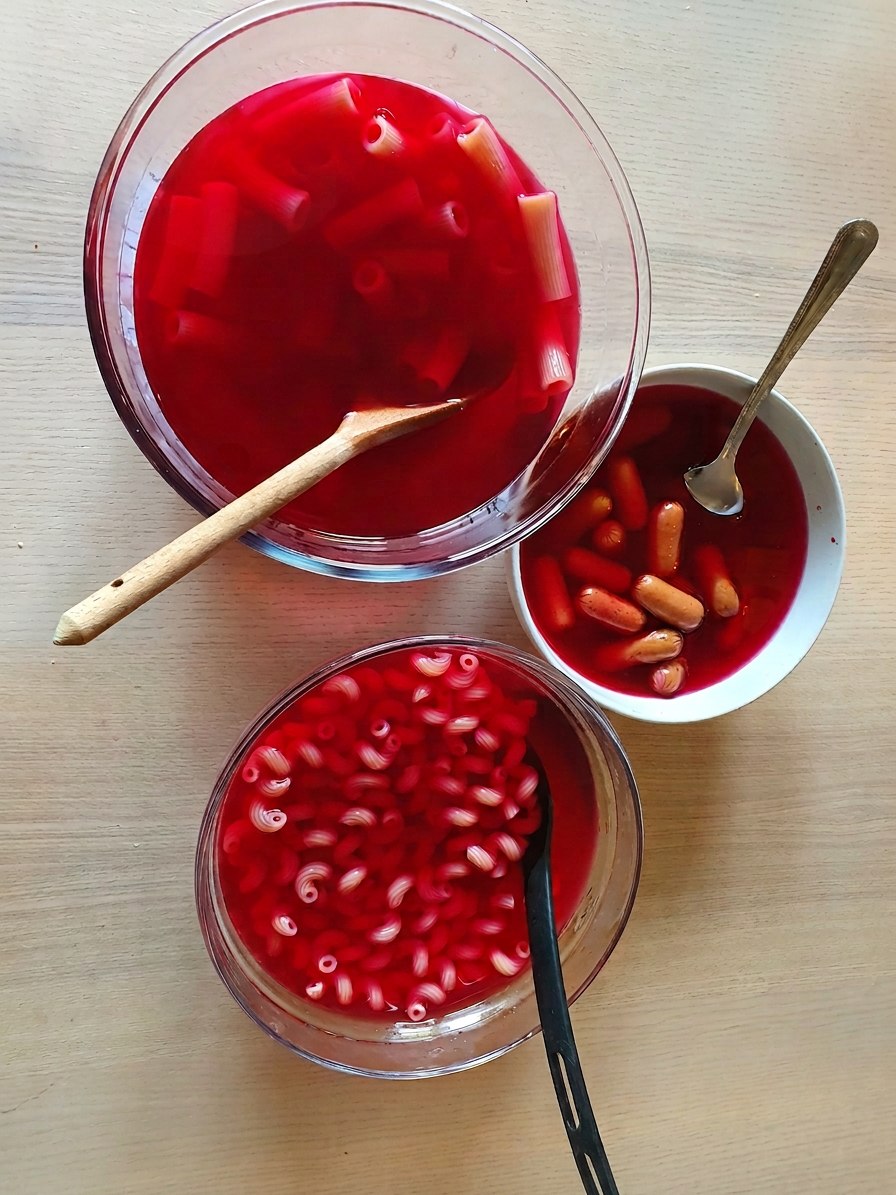
- Fill three bowls with warm water from the tap. Leave enough space in each bowl for the food item.
- Choose one colour of food colouring. Add 5–7 drops to each bowl. Using the same colour in all three bowls makes it easier to compare the results.
- Place one food item in each bowl.
- Leave the food in the coloured water for 10 minutes. Stir the water gently with a spoon from time to time.
- Carefully pour away the coloured water.
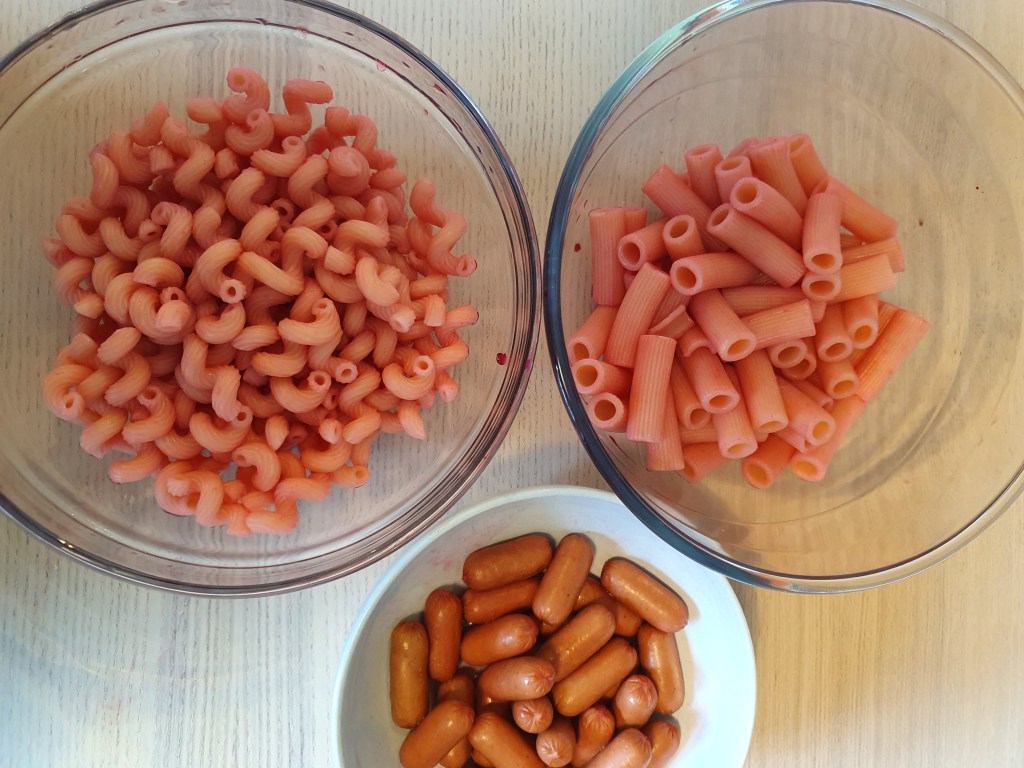
- Observe the results. Which food has taken up the colour best? Did the pasta or the sausages become more strongly coloured? If you used different pasta shapes, did they take up the colour in the same way? Older children can write down what they observe and compare the different foods.
Background science
Food colouring can stick to the surface of food. Different foods have different types of surfaces, so some foods take up or hold on to the colour better than others.
When the food colouring comes into contact with the food, its dye particles can interact with molecules on the food surface. Some of these interactions are physical, such as the dye becoming trapped in tiny spaces or pores on the surface. In some cases, dye molecules can also form strong chemical interactions with molecules in the food.
A chemical change happens when substances form new substances with different chemical properties. A chemical reaction is a process in which this happens. However, simply seeing food become coloured does not prove that a chemical reaction has taken place. In this experiment, the main process is the dye moving from the water and sticking to or becoming trapped in the surface of the food.
In this experiment, the pasta may take up the food colouring more evenly than the sausages. The sausage skin can prevent the colour from reaching the food underneath. The colour may be stronger in small holes or damaged areas of the skin, where the coloured water can reach the inside more easily.
The different pasta shapes may take up the colour in a similar way. This is because, even though the shapes are different, they are made from the same type of pasta and have identical surface properties.
This experiment shows that the material and surface of an object can affect how well a dye sticks to it.