When taking a walk in the forest in early spring you can find many feeding traces of different animals. Join us in exploring some of them.
1 Traces left on trees
Deer, rabbits and hares all feast on the bark of trees during the winter months when grass and other plants do not grow well. But they leave different clues on trees that help us tell them apart.
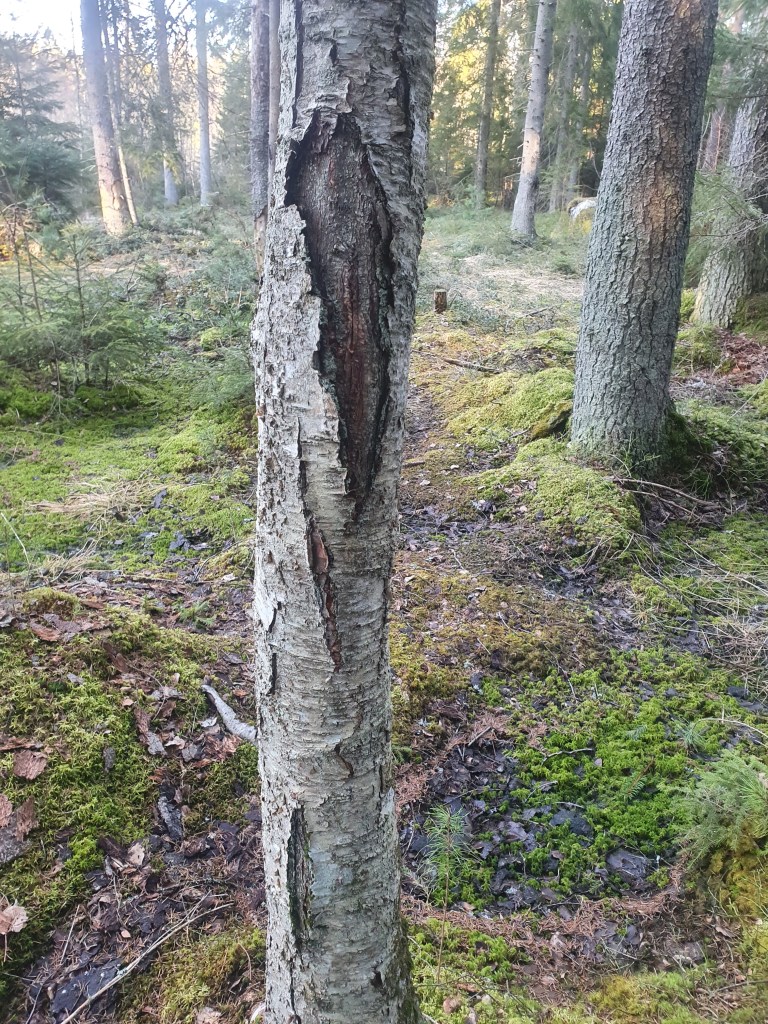
Deer are quite tall, so they can reach higher parts of a tree. When deer eat, they often tear the bark with their mouths. This can leave rough, jagged edges on the tree. You might also see damage higher up, about as tall as your chest or even above your head. In addition, roe deer and red deer normally pull of strips of bark, while fallow deer are more content to nibble.
The image below shows a tree which had some of its bark most likely stripped of by a roe deer during winter. The dark colour shows that the tree has begun to heal in this part.
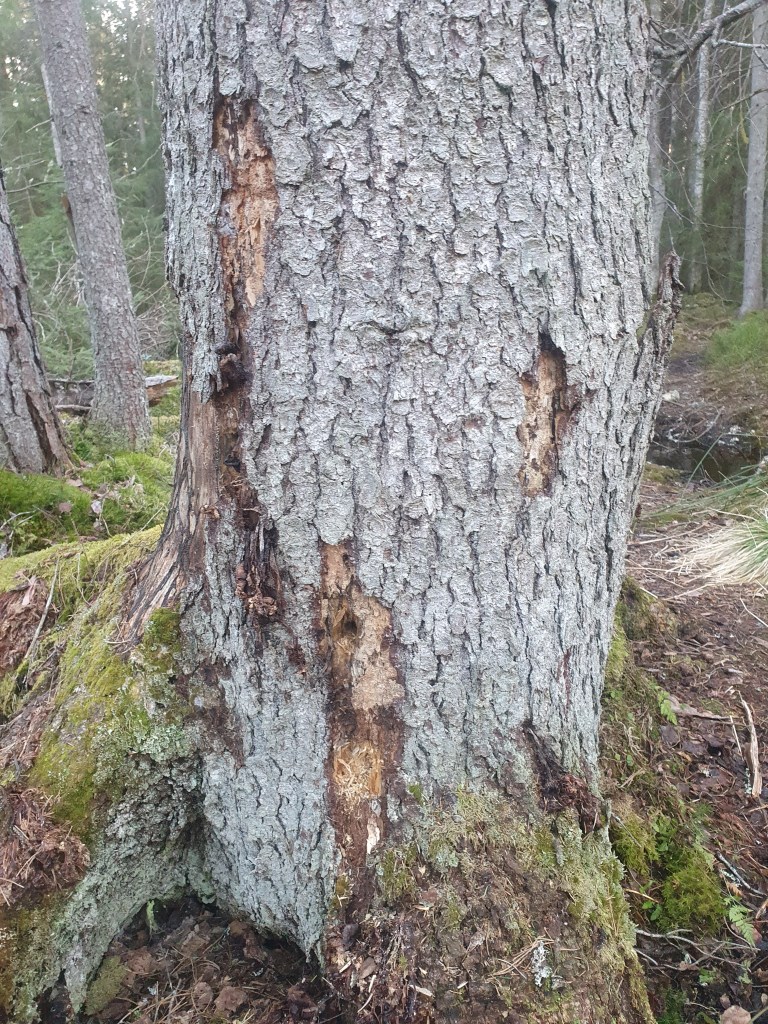
Rabbits and hares are much smaller than deer, so they can only reach low parts of a tree. They have very sharp front teeth, and they nibble neatly. This means the bark or twigs they eat often look cleanly cut, almost like they were snipped with tiny scissors. The damage is usually close to the ground.
This image shows the damage in the bark close to the ground which means that it may have been eaten by a rabbit or hare.
In summary, if the tree is damaged high up with rough edges, it was likely a deer. If the damage is low down with neat, tidy bites, it was probably a rabbit or a hare.
2 Traces left by wild boar
Wild boar leave very noticeable signs when they search for food in the forest.
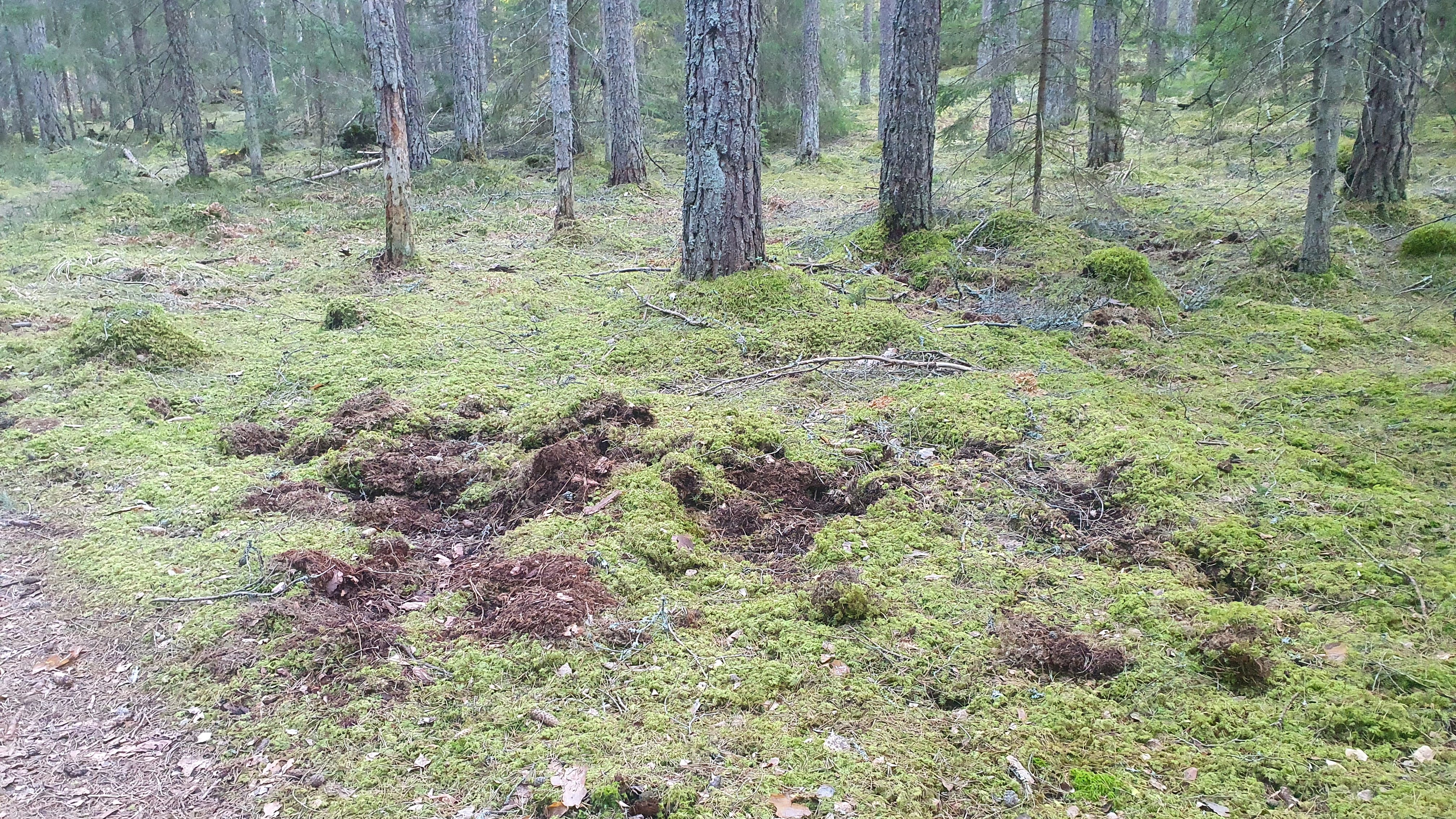
They use their strong snouts to dig in the ground. This is called “rooting.” When they do this, they turn over the soil looking for roots, insects, worms, and bulbs. The ground can look messy, with patches of earth all churned up, almost like it has been ploughed.
You might also see small holes and uneven ground where they have been digging. Sometimes large areas are disturbed, not just one spot.
Wild boar can also leave footprints. Their tracks look a bit like a deer’s, but they are rounder and wider. If the ground is soft, you may see many of these prints together.
So, if you see torn-up soil, lots of digging marks, and hoof prints in the forest, a wild boar has probably been there looking for food.
The image below shows a small area in a forest where wild boar have rooted for food.
3 Traces left on gnawed cones
In the forest, you can often find eaten spruce cones on the ground. By looking closely, you can tell which animal has been feeding on them.
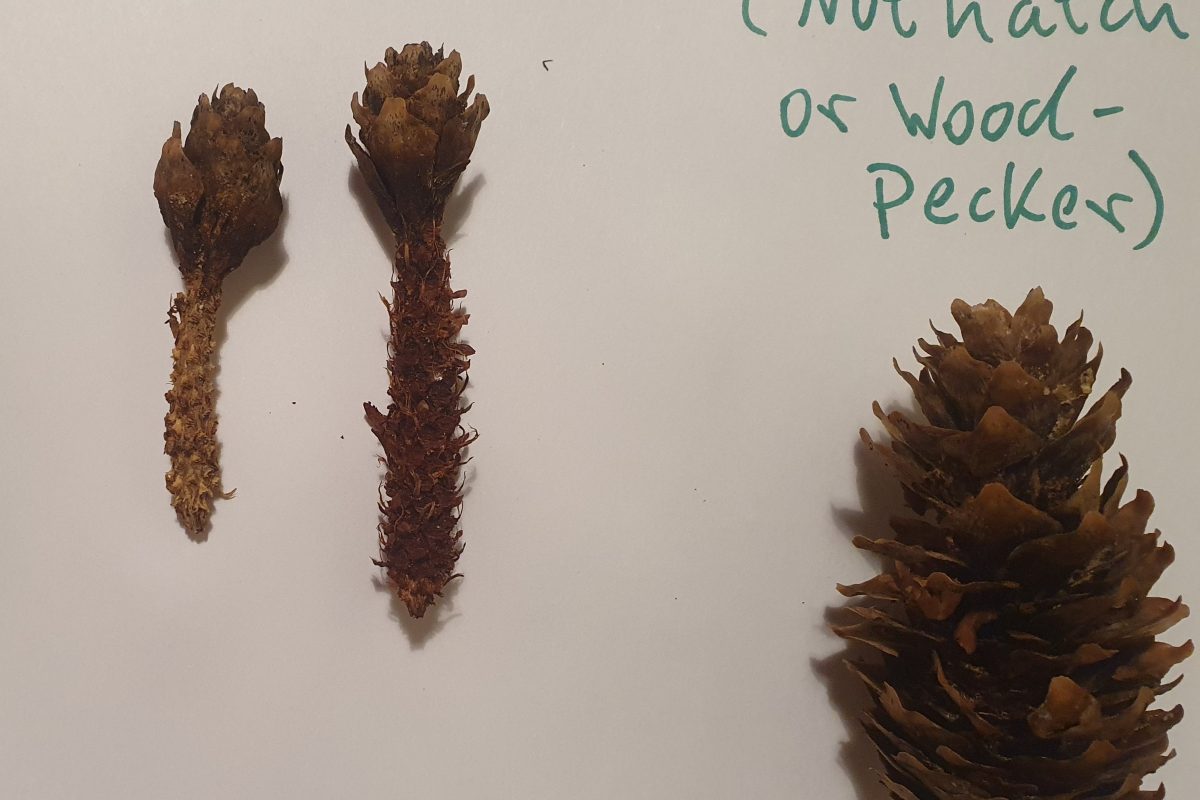
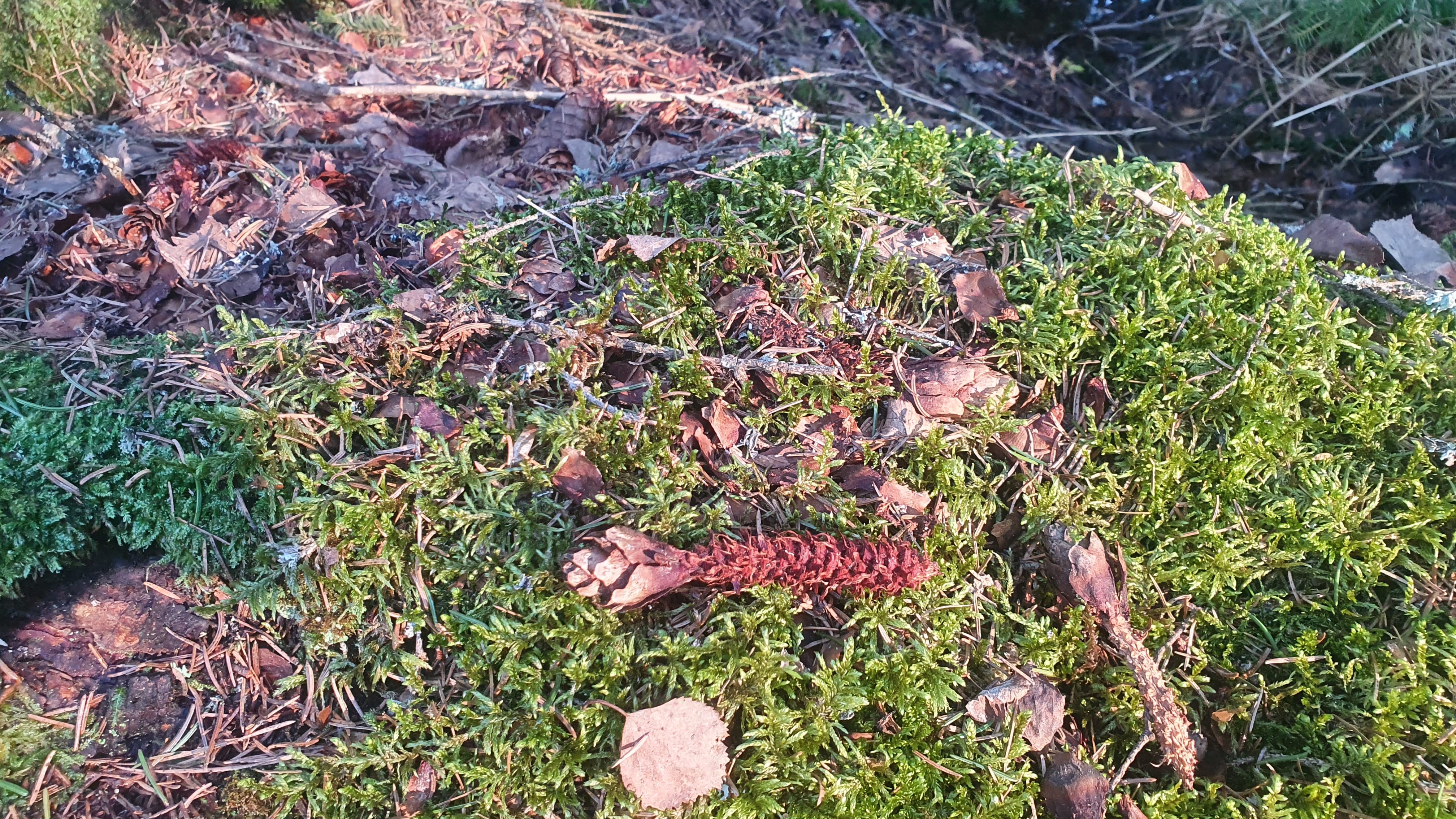
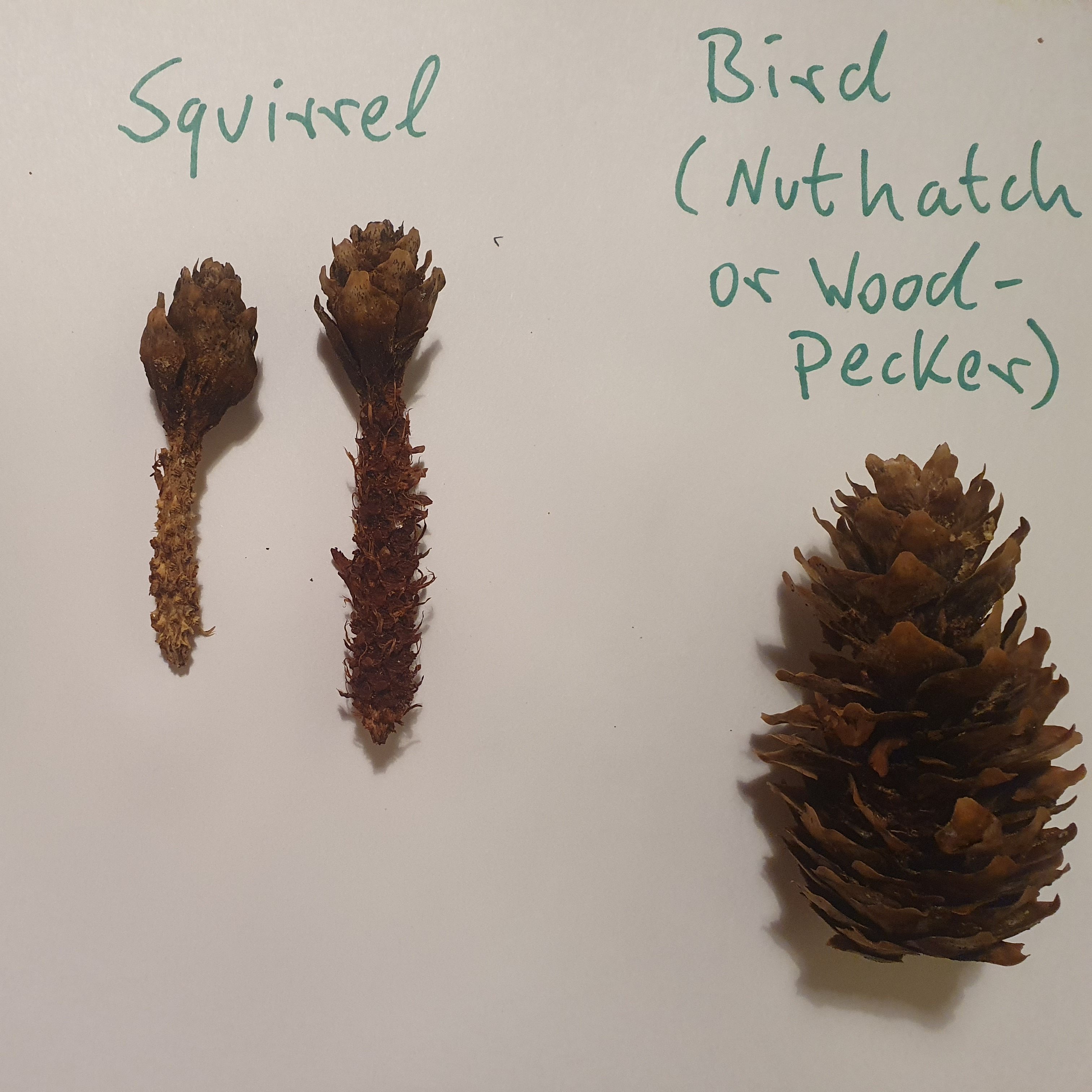
A squirrel leaves quite a tidy cone behind. It holds the cone and nibbles off the scales one by one. When it is finished, mostly the middle part, called the core, is left. Squirrels normally leave some scales at the tip of the cone where they have been holding it. The image below shows a cone left by a squirrel under a tree. You can even see some scales around it on the ground.
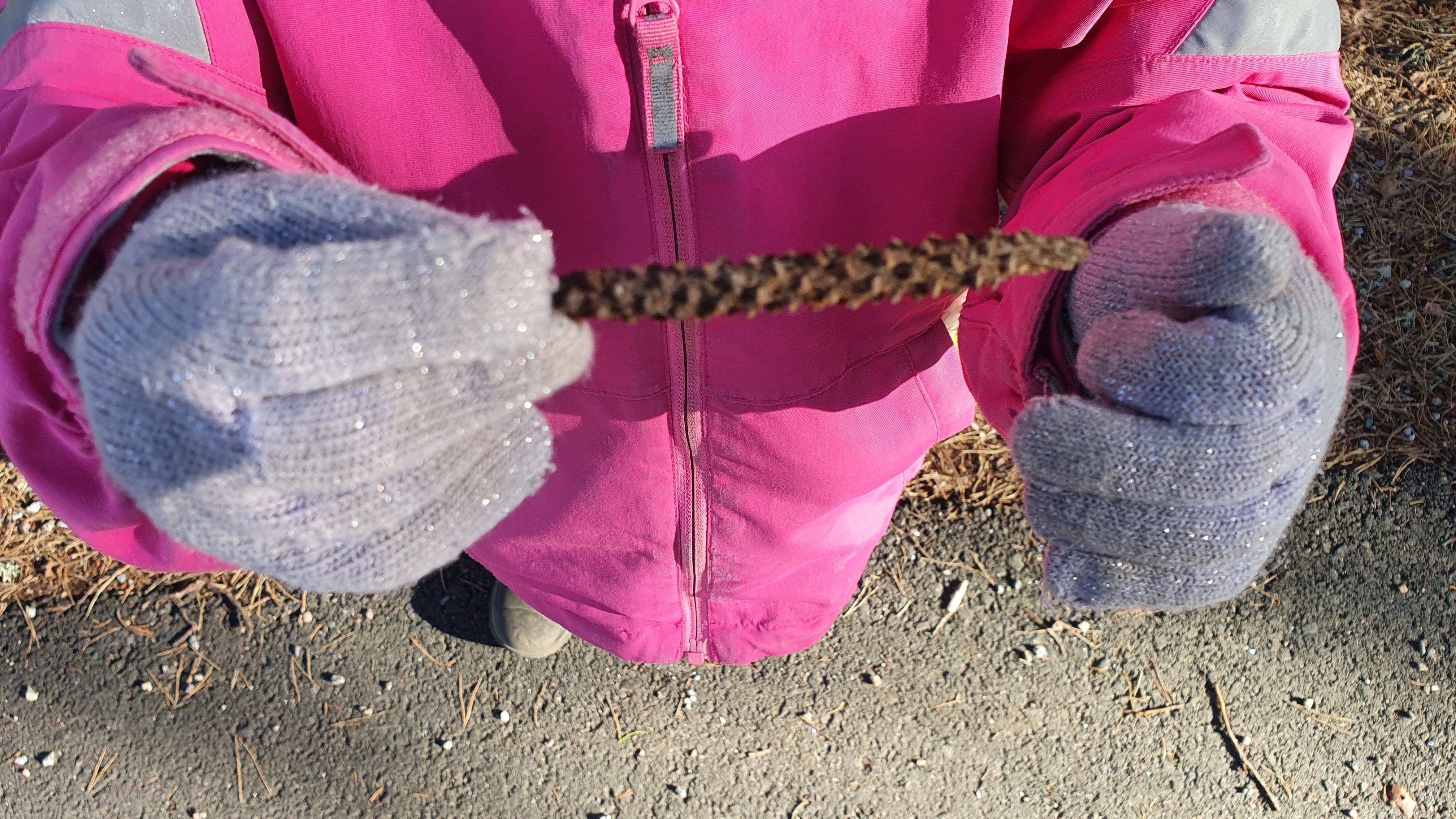
A wood mouse eats in a different way. It strips the cone of every last scale and only the clean core is left, which may almost just look like a stick which can be seen in the image below.
Birds like woodpeckers and nuthatches have a special way of eating cones. They often wedge the cone into a crack in the bark of a tree to hold it still. Then they peck at it to get the seeds out. The cone may look pecked and broken, with rough marks. Sometimes you can even find the place in the tree where the cone was held, called a “cone anvil.”
So, a clean, stripped core is likely from a wood mouse, a cone with scales left at the top from a squirrel and a pecked cone, often near a tree crack, from a bird like a woodpecker or nuthatch.
 A tang of science